If you're having trouble viewing this email, you cansee it online.
ADVOCACY UPDATE
August 14, 2025
In this update:
New White House executive order would upend federal grantmaking processes
TIME-SENSITIVE:Is your government funding currently delayed? Please let us know ASAP!
U.S. Department of Justice issues new DEI memo
Action alert: Help preserve nonprofit nonpartisanship
New White House executive order would upend federal grantmaking processes
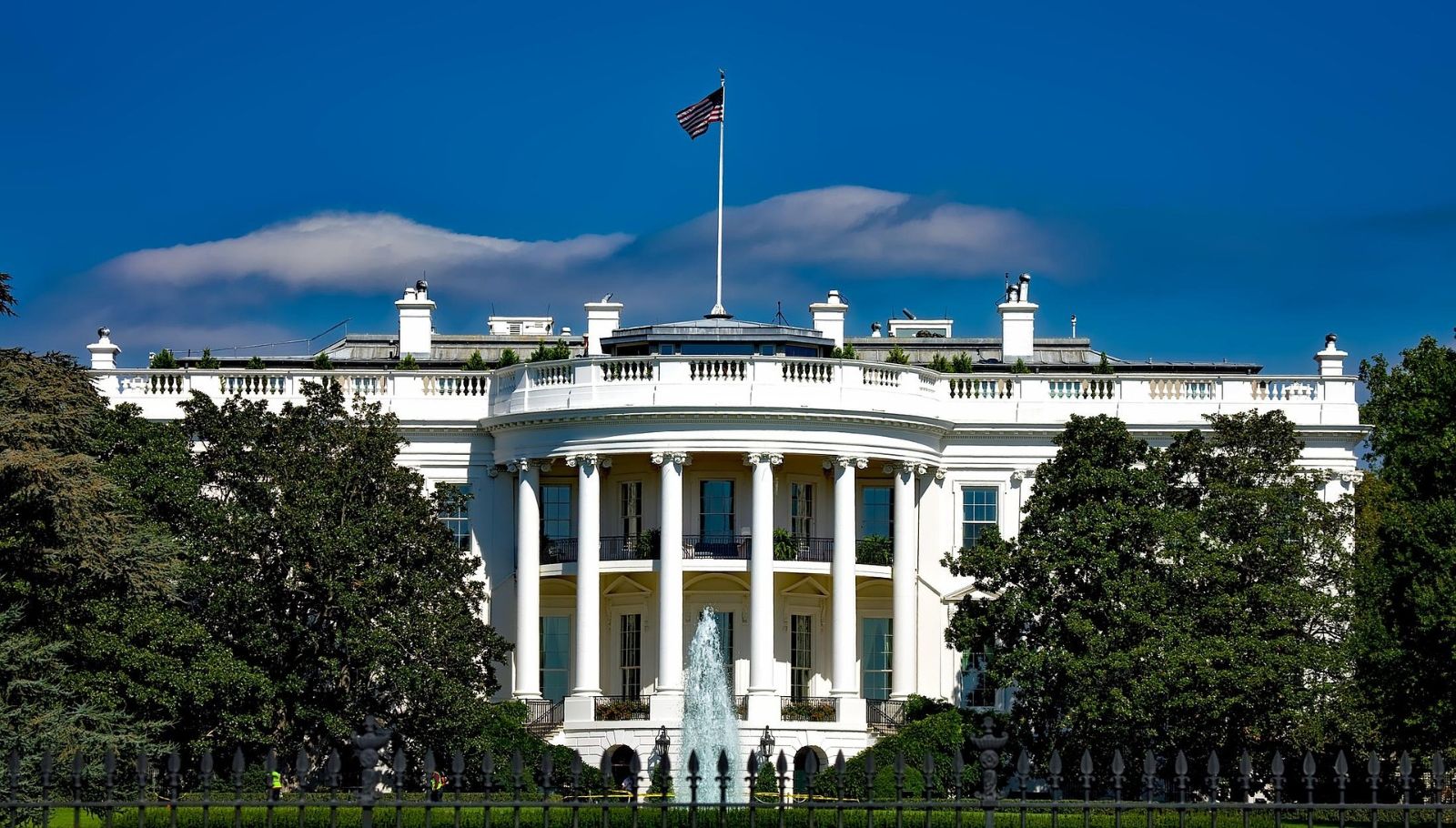
A new executive order (EO) issued on August 7 by President Trump would significantly alter and politicize the process by which federal grants get approved, payments issued, and awards rescinded, all to the likely detriment of many nonprofits and state and local governments that rely on such grants.
·Assign mandatory approval authority for federal grant opportunities and awards to senior level political appointees in each federal agency that is empowered to issue or manage federal awards. These senior level officials are charged with creating new processes to review new funding opportunities and discretionary grants to ensure “consistency with agency priorities and the national interest.” The order stipulates that, except as required by law, no new funding opportunity notices shall be issued without approval by such official until the new review policies are in place.
·Require discretionary awards to “demonstrably advance the President’s policy priorities.”
·Prohibit discretionary awards from promoting or funding programs that use race or “proxies” for race as selection criteria; programs or entities that deny a “sex binary” or “the notion that sex is a chosen or mutable characteristic;” “illegal immigration;” or “any other initiatives that compromise public safety or promote anti-American values.”
·Direct the Office of Management and Budget (OMB) to review and revise the OMB Uniform Guidance, a comprehensive set of rules covering government grants and contracting that establish minimum indirect cost levels and other important provisions.The order directs OMB to issue new rules to permit discretionary grants to be terminated “for convenience, including when the award no longer advances agency priorities or the national interest.”
·Require additional steps and approvals for draw-downs of funds by grant recipients of previously approved funds.
The EO also calls for grant opportunities to be written in plain language to facilitate broader access by potential applicants, and for greater inter-agency coordination to reduce potential duplication of announcements or awards.
Overall, the EO could create added challenges and roadblocks for government grant applicants or recipients. It will likely have the effect of delaying, withholding or rescinding funding from key programs for nonprofits and state and local governments.The extent of its impact will become clearer when the OMB issues its proposed regulatory and procedural changes as mandated by the order.
It’s unclear at this point whether, or what, legal action may be available or taken in response to this order.For now, nonprofits should expect and, if possible, try to plan for additional hurdles or funding delays at try to mitigate them now to the extent possible.Please keep us informed about the communications you are receiving or any problems you are encountering, so that we can continue to advocate forcefully on this issue.Also see the very important time-sensitive request in the next section.
Has your federal government grant award been delayed? Please let us know as soon as possible.
Since January, the federal government has taken a wide variety of disturbing steps to delay, terminate or rescind previously approved funding for nonprofits and other grantees. There is a concern that more such funding may be in jeopardy as the end of the federal government’s fiscal year on September 30 approaches.
One way in which the Administration might attempt to claw back funding is through a "pocket rescission," a legally questionable move by which the president asks Congress, 45 days or less before the end of the federal fiscal year, to rescind specified funding that was previously approved by Congress. As the National Council of Nonprofits explains, under the Impoundment Control Act of 1974, the President can submit a rescission proposal to Congress, asking it to claw back funding from specified budget items that Congress had previously approved. In most cases, the President can withhold funding for up to 45 days while Congress decides whether to approve the President’s proposal. Without congressional approval, the rescission proposal cannot take effect, and the funds in question must be spent as Congress originally directed. Under a “pocket rescission,” the President would submit his rescission request less than 45 days before the end of the fiscal year, withholding funds until the clock runs out at midnight on September 30, while budget authorization lapses. The U.S. Government Accountability Office (GAO) has determined that “pocket recessions” are unlawful.
Also watch for potential tactics by which the government fails to process funds, though approved, by failing to notify grantees or execute requisite paperwork or other procedures. In a nutshell, if a grantee never receives formal notification about the approval of their grant, or if the funding process isn’t set in motion, then once the fiscal year ends, the government would treat the grant as if it has never been obligated in the first place.
If you receive federal government funds (including state or local pass-throughs), and if you would have normally received funding, approval confirmation or grant agreements by now and have not had any communications with your government funding agencies, please let us know right away to help inform and strengthen our advocacy on this issue. Contact Doug Schoenberger (doug@njnonprofits.org) or Linda Czipo (lczipo@njnonprofits.org) to share your situation.
New DEI Memo from the U.S. Department of Justice
On July 29, U.S. Attorney General Pam Bondi issued a memo titled, “Guidance for Recipients of Federal Funding regarding Unlawful Discrimination,” that seeks to dramatically expand the federal government’s interpretation of what constitutes “illegal DEI” by recipients of federal funds, including nonprofits. The memo identifies not only racial discrimination as illegal, but also lists as “potentially unlawful” a range of activities as “proxies,” “ostensibly neutral criteria that function as substitutes for explicit consideration of race, sex, or other protected characteristics.” As examples, it includes using criteria such as cultural competence, lived experience, geographic or institutional targeting, “overcoming obstacles” statements, and others.Other practices called out include “safe spaces” for people of specific racial, ethnic or other protected characteristics; prioritizing women or minority-owned businesses in contracts or vendor selection; training sessions that exclude participants based on race or other protected characteristics; geographic targeting; “overcoming obstacles” statements; or others.
The memo recommends a series of “best practices” to lower potential risk. These include focusing on specific, measurable skills for employment or program participation; prohibiting demographic-driven criteria; ensuring inclusive access to all qualified individuals; documenting all rationales; and excluding quota-driven activities or proxies.
Comment:Attorneys are still carefully analyzing the memo, its meaning, and its potential impact. Some have noted that, in addition to its expansive reach and vague definitions, there are direct contradictions between provisions in this memo and other stated goals and policies of the Administration. Others have stressed that nothing in this memo changes the actual laws regarding discrimination.
Earlier this year, the attorneys general from 16 states, including New Jersey, issued employment-focused guidance to “help businesses, nonprofits, and other organizations operating in our respective states understand the continued viability and important role of diversity, equity, inclusion, and accessibility efforts (sometimes referred to as ‘DEI’ or ‘DEIA’ initiatives) in creating and maintaining legally compliant and thriving workplaces.”
We encourage you to continue to review your organization’s practices, with an attorney if at all possible, to mitigate risk while preserving your commitment to your values and your ability to continue your mission.
Also watch your calendar for the fourth installment of “Beyond the Rulings: Strategies to Safeguard Nonprofits in a Shifting Legal Landscape,” featuring Lloyd Freeman, Esq., of Buchanan Ingersoll. This series, designed to help nonprofits navigate this environment while staying true to their missions, is presented by the Council of New Jersey Grantmakers, Gathering Ground, Grunin Foundation, New Jersey Center for Nonprofits, NonprofitConnect, Nonprofit Professionals of Color Collective, Pro Bono Partnership, and the Support Center, with support from the Community Foundation of New Jersey, Grunin Foundation, and Schumann Fund for New Jersey.
Act now to help preserve nonprofits from partisan politics
As we reported previously, the Internal Revenue Service (IRS) has asked a federal court in Texas to approve a legal settlement that would undermine the federal law – commonly known as the Johnson Amendment – that protects nonprofits from partisan politics. If approved, the settlement would declare the Johnson Amendment to be unconstitutional and bar enforcement of the law against the entities involved in the case. It would set a dangerous precedent and open the door to dismantling the nonpartisanship framework that has protected 501(c)(3) organizations for more than 70 years.
President Trump and some in Congress have made it a priority to weaken or eliminate the Johnson Amendment. The New Jersey Center for Nonprofits, like thousands of secular and religious nonprofits nationwide, has long supported the existing ban on partisan political activity, which has been in place for more than 60 years. We believe strongly that weakening this protection would undermine trust in the integrity of all 501(c)(3) nonprofits, make organizations vulnerable to untoward political pressures, and all but guarantee the infusion of “dark money” into charitable work.
ACTION NEEDED: We urge all nonprofit organizations - including faith-based organizations - to help protect 501(c)(3) nonprofit nonpartisanship by signing onto a national letter organized by the Interfaith Alliance, National Council of Nonprofits, Independent Sector, and other organizations. The deadline to sign is August 22.
Also join the National Council of Nonprofits on August 26 at 3PM for a national webinar, "How to Keep Charitable Nonprofits and Houses of Worship Protected from Partisan Politics."
We continue to watch this issue closely and will share more information as it becomes available. In the meantime, please remember that for now at least, the existing ban on partisan political activity by 501(c)(3) organizations, including religious entities, is still in effect. For more information about how to engage during election season on a nonpartisan basis, download our New Jersey Nonprofit Voter Engagement Guide, produced in partnership with Nonprofit VOTE and the National Council of Nonprofits.
"As nonprofits, our entire reason for being is to make society better by our missions and deeds.
As part of that promise, we have a responsibility to advance an equitable society, to shine a bright light on the harsh reality of systemic racism and injustice and to actively work against it."
Join YOUR New Jersey Nonprofit Network!
Be part of the only statewide organization representing ALL charitable nonprofits, no matter your mission, size or location.
Membership is a sound investment in your organization and in New Jersey's nonprofit community. Benefits include:
Annual dues start at just $99. Become a member and start your benefits right away!
Information in this communication does not constitute legal advice or a legal opinion. For answers to specific questions concerning your situation, you should consult a knowledgeable attorney who can advise you regarding your particular circumstances.
New Jersey Center for Nonprofits 3635 Quakerbridge Rd, Suite 35 Mercerville, NJ 08619 732-227-0800 | center@njnonprofits.org